May 09, 2019

The revolution of CBT in your pocket? Hi Woebot!

I haven't written in so long, that it feels really weird to write about anything: so much happened, so many things caught my attention, so many things I've thought of sharing... why would I share this one and not the others?

So it feels random, but I have to choose something. Here it is. It's about Cognitive Behavioral Therapy, a.k.a. CBT.

I heard not long ago the incredible story of "Dr. Davison and the Gay Cure" and I really recommend the podcast. To think that probably the most instrumental person in the development of CBT, the evidence-based therapy which helps people around the world, was originally working on conversion therapy - and had a kind of epiphany which made him turn his research and gifts towards the good of humanity is really, quite incredible.

Meanwhile, everyone can benefit from CBT with (a) countless apps which use principles derived from CBT research and (b) a very special companion, a chatbot called Woebot, which does its best to deliver what you need when you need it, using AI for the textual interface and CBT for the contents.

Following Tristan Harris, I think we ought to spend more time with our fellow humans and less on our screens - to simplify greatly his crusade - but there is no doubt that having on your smartphone for free what would in the past require expensive sessions with a psychotherapist is a revolution.

Why am I posting this today? I was heartened to hear this piece on NPR today: https://www.npr.org/sections/health-shots/2019/05/05/719780061/from-gloom-to-gratitude-8-skills-to-cultivate-joy - and was inspired to share it.

Namely, here are the 8 techniques or skills which, when used regularly can improve one's outlook on life:
Here's a quick summary of the eight techniques used in Moskowitz' study:
  1. Take a moment to identify one positive event each day.
  2. Tell someone about the positive event or share it on social media. This can help you savor the moment a little longer.
  3. Start a daily gratitude journal. Aim to find little things you're grateful for, such as a good cup of coffee, a pretty sunrise or nice weather.
  4. Identify a personal strength and reflect on how you've used this strength today or in recent weeks.
  5. Set a daily goal and track your progress. "This is based on research that shows when we feel progress towards a goal, we have more positive emotions," Moskowitz says. The goal should not be too lofty. You want to be able to perceive progress.
  6. Try to practice "positive reappraisal": Identify an event or daily activity that is a hassle. Then, try to reframe the event in a more positive light. Example: If you're stuck in traffic, try to savor the quiet time. If you practice this enough, it can start to become a habit.
  7. Do something nice for someone else each day. These daily acts of kindness can be as simple as giving someone a smile or giving up your seat on a crowded train. Research shows we feel better when we're kind to others.
  8. Practice mindfulness by paying attention to the present moment. You can also try a 10-minute breathing exercise that uses a focus on breathing to help calm the mind.

Although it could be that, applied regularly, for many people, less than a dozen good techniques applied deliberately could combat the gloomy tendencies of our stressed souls, it's very rare that people stick to something they've just heard briefly about - which is why a chatbot like Woebot is such a significant advance.

October 31, 2016

Vote for Hillary, advocate for electoral reform

Sorry for the folks who are not interested in the US election... Here are some thoughts that I felt compelled to put in writing.

A provocative headline aimed at the liberals read “You would vote for a liberal Donald Trump”. Would I? After reading the arguments of Scott Alexander's Slate Star Codex – which I urge you to read through – I wouldn’t: I would vote for a right-wing, neo-con, “crooked” Hillary Clinton who is experienced and predictable and respects the basic tenets of democracy if she faced a narcissistic, unstable con artist with no respect for democracy seeking self-aggrandizement - however liberal he claimed to be to get elected. Because partisan issues can be delayed by four years but damage done to democracy takes a generation to undo.

II

People say that the candidates are flawed, but it's the *election process* which is flawed. The easiest and most required reform in my opinion is some kind of ranked choice voting, like advocated by FairVote and, in the case of the presidential election, abolishing or reforming the Electoral College. I understand those who feel they have been given the choice between the least of two evils in this election. Look at the image below, wouldn’t the right-hand side feel like a dream in today’s context?
A farce Choose one: Hillary Clinton Donald Trump A fair democratic vote Rank any number of options in your order of preference: Bernie Sanders Hillary Clinton Jeb Bush John Kasich Marco Rubio Ted Cruz Donald Trump

III

The US needs many things. It needs universal health care, it needs improved infrastructure and quality of life, it needs a way to include unskilled workers in the economy of the 21st century, it needs to cope with global warming, and it needs spiritual healing. The partisan rift and constant feud is crippling government – even often shutting it down entirely. I don’t expect Hillary Clinton to bring spiritual healing if Barack Obama couldn’t make the situation any better despite his good intentions to reach out to Republicans and increase bipartisanship. I hope Hillary Clinton wins and tackles the other challenges with talent and I will contribute now to electoral reform advocacy.

April 23, 2014

A young father's manifesto

Daughter, darling, your mother and I commit, I always make every effort to:
- Put your needs above ours
- Respect your nature like a pristine landscape
- Equip you with the tools necessary for life: self-confidence, self-control, perseverance, fluid thinking, humor, joy, empathy, introspection, resilience
- Teach you to trust, to be independent but also to be reliant, love and be loved
- To give you knowledge and teach you how to teach yourself
- Listen to you and be attentive to you
- Encourage you in everything that you will endeavor, and in the paths you will choose, even we will not understand them,
- Respect your choices even if they will be about turning your back on us
- Love you with all our heart and all our soul
- To protect you and to teach you how to defend yourself
- Satisfy your needs without utilizing you to satisfy ours

The Messenger

It is hard for me to find words these days.

My wife and I have been blessed with a beautiful, delicate, adorable baby girl who, from the moment she joined us on January 26, 2014, irremediably changed our lives.

The significance of the fact that we are now a family and that we have given birth to a new human being, is hard to grasp and feel at the right level.

At the lowest level, of course, the daily care of the baby and the constraints on our schedule and movements do not let us forget, even for a minute, that we have to fulfill the role of parents. And we take very seriously the responsibility of providing our baby with the best care, as much attention and gentleness as needed, and all the stimulating activities that will help her develop.

When I try to describe our behavior, I want to say that we feel responsible for a precious soul. But the questions I ask myself are: "How did we get this sense of responsibility? Is it out of instinct? Out of innate love? And how do we come to see the baby as a soul?"

First of all where does the sense of responsibility come from? When we care for the baby, we are saying how we know that this baby has no other caretakers than us and how we believe that she deserves a bright future that only good, loving, care can provide - or at least that the lack thereof seriously jeopardizes. Therefore the sense of responsibility comes first from our sense of empathy: if we do not take care of her, this baby will suffer - now, for starters, but also later.

Grasping the baby's future as a soul and as someone who will grow to have a special bond to us is not easy - to me at least. The baby is indeed a precious soul in the making, and one who will be the closest soul to ours - at least for a while before adult madness may damage the bond. But hen the baby is in its first weeks, it seems a purely instinctive being - and one that compares poorly at that to other animals. It is satisfied when it has been fed, shows some variations in behavior that we may attribute to "character" but no real signs of the "soul" that is in the making. Progress in the first weeks is measured in the improvement of the instincts and the progressive birth of a capacity to observe - without reaction at first - which we are quick to interpret as "curiosity". Still, the virtual absence of reaction from the baby at that stage means that all our efforts seem vain - which strikes us in the most frustrating way when she cries of course.

I have heard several people saying that they simply hate the first few months of the life of the baby until the baby started communicating, or that they connected with their baby only after some three or six months. It is rare to hear such blunt statements but I respect those who speak of this frankly. I had and never heard of that and would never have believed I could ever feel like that until I became a father. Now, as I just wrote, I admit how difficult it is to connect to the "soul" within the baby until she starts reacting and communicating.

Prior to that, it is our intellect that teaches us that the baby is going to become a person, our child. It is probably during that stage that our social environment can be of great help to create the bond: resemblance and other family traits are brought up in conversations; parental behavior is praised and encouraged; the baby's facial expressions and behavior are interpreted ostensibly in terms of character, reactions and emotions.

Yesterday, I was blessed by the feeling that the day had come that my baby's conscience had emerged - I saw a smile in reaction to my face and babbling and I was moved to tears.

After writing all that, no need for many words to introduce the blessing of Joseph's sons by his father, Jacob, as it appears in The Book of Genesis illustrated by Robert Crumb:

... THE MESSENGER RESCUING ME FROM ALL EVIL, MAY HE BLESS THE LADS, LET MY NAME BE RECALLED IN THEM, AND THE NAMES OF MY FATHERS, ABRAHAM AND ISAAC, LET THEM BE TEEMING MULTITUDES IN THE MIDST OF THE EARTH!

The Messenger who has rescued me from all evil, may he bless little Tali. Amen.

February 26, 2014

Poème pour Tali

Allez ma petite Tali chérie,
Il faut téter !
Il faut téter,
Et il faut m'aimer.
Il faut téter,
Il fait m'aimer,
Il faut pépé Popi
Il faut papa Jojo
Il faut papy Bertie
Il faut maman Olélie,
Il faut mamie F et mamie Grecque.
Il faut dodo.
Surtout dodo !
Bonne nuit ma petite chérie

February 22, 2014

Manifeste d'un jeune père

(An English version follows here.)

Ma fille chérie, nous nous engageons, ta mère et moi, à faire toujours tout notre possible pour :
- Placer tes besoins avant les nôtres
- Respecter ta nature comme on respecte un paysage pristin
- T'équiper des outils nécessaires à la vie : confiance en toi, maîtrise de toi, persévérance, souplesse d'esprit, humour, joie de vivre, empathie, introspection, résilience
- T'enseigner à faire confiance, à être indépendante mais aussi à être dépendante, savoir aimer et savoir être aimée,
- Te donner des connaissances et t'apprendre à apprendre,
- T'écouter et être à ton écoute
- T'encourager dans ce que tu entreprendras, et dans les voies que tu choisiras, même lorsque nous ne les comprendrons pas,
- Respecter tes choix même s'il s'agira de nous tourner le dos,
- T'aimer de tout notre cœur et de toute notre âme,
- Te protéger et à t'apprendre à te défendre,
- Satisfaire tes besoins sans t'utiliser pour satisfaire les nôtres

August 24, 2013

Wind rose of Jerusalem

Where does the wind blow from in Jerusalem? I was wondering because I needed to know how to get fresh air in the evenings into our (future) apartment.

I couldn't find the information, so I pulled two years' worth of meteorological data (2011 & 2012) for Jerusalem from http://data.gov.il/ims and set about to create a graphic view of the wind direction, weighted by its speed, in Excel. Here's the result:


Unquestionably, the dominant direction is from the West (West-North-West to be accurate), and especially so in the summer!

There's more to it as one could not weight by wind speed (taking into account values only above a given threshold), or on the contrary weight by something more meaningful, e.g. wind energy - but I'm not interested in putting up a wind turbine at this stage! - but I'll post more on this later if prompted.

June 07, 2013

For old times' sake

About three weeks ago, my wife and I joined a group of French speakers on a "photographic tour" of the Nahalat Binyamin neighborhood in Tel Aviv. 

On Fridays, the Nahalat Binyamin street is crowded by stalls of artists and craftsmen and craftswomen and by jugglers and musicians - as well as the sheshbesh players, elderly dwellers of the neighborhood.

On this occasion, I pulled my M6 Leica from its shelf, my wife went out of her way to buy the Kodak BW400CN film I'm used to and I experienced anew the smell of the film, the meticulous activity of loading of the film, the thought invested in each picture, conscious of its cost and its potential value, the manual focus with the telemeter, the measuring of the light and after that the feeling and hope that there are - literally - latent images, potential masterpieces, in that undeveloped film. The pictures could be good, one or two could be excellent, some will be missed, most will be disappointingly mediocre. This experience was worth the effort. It took me back in time to Cambodia, to Paris, to my first years in Israel, when I would regularly walk with my film camera in search of the photographic experience that Patrice Moracchini ingrained in me.

What a smile!

 Nitzan Gilad, ceramic artist

 René Borda, probably the only Bolivian Indian living in Israel... 

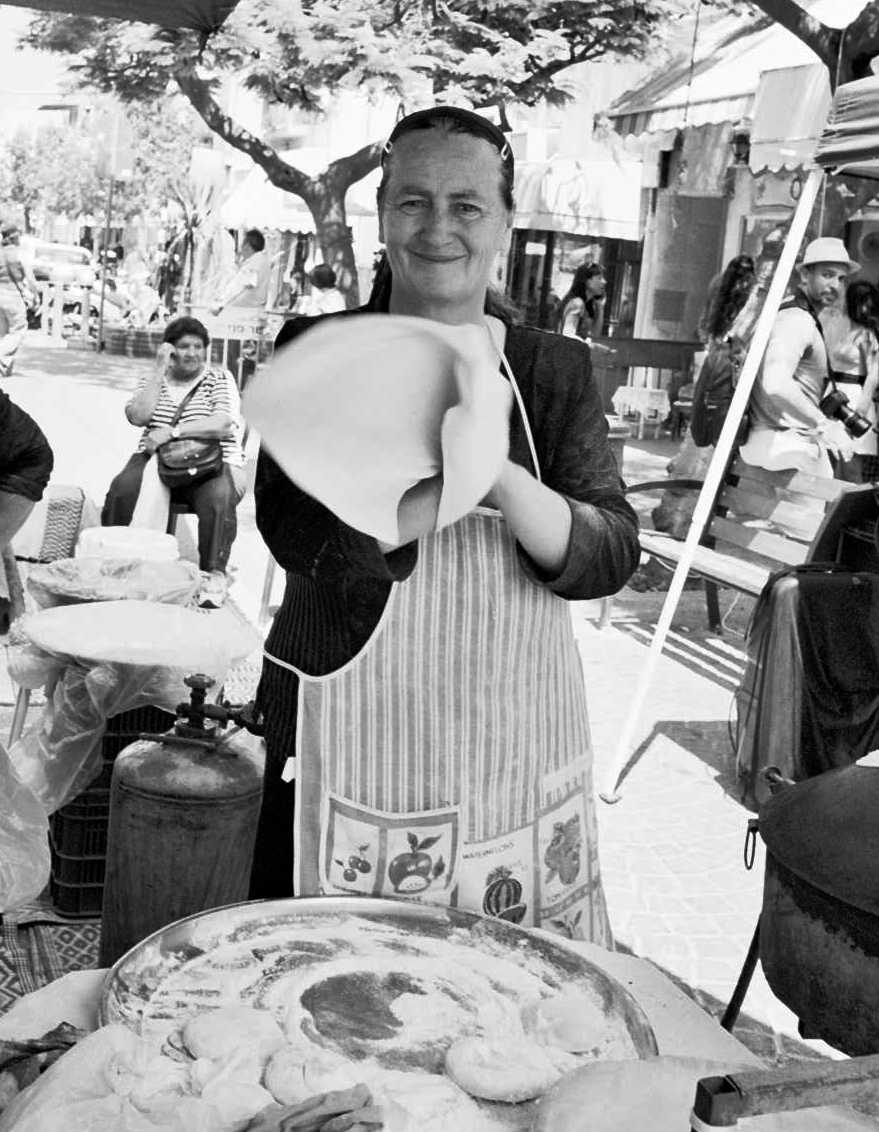
Aliya from Dalyat al-Carmel, preparing a Druze pita 

 Oh weren't they angry at me for taking a picture of them while they played! But I didn't want to interrupt them...


November 28, 2012

Homage


Years ago, a friend acquainted me with the famous poem by William Wordsworth from which the uncanny quote comes, "The Child is father of the Man". 

Often, I'm reminded of this quote  and of the friend.

I stumbled today upon an article in the New York Times which used the quote as title, with a twist: The Father Is Child of the Man, by Bruce Feiler.

The author quotes Mary Catherine Bateson, an anthropologist, as saying:
“A great amount of what parents learn we are taught by our children.”

I wished it were true. It should.

"MY HEART LEAPS UP WHEN I BEHOLD"

          My heart leaps up when I behold
              A rainbow in the sky:
          So was it when my life began;
          So is it now I am a man;
          So be it when I shall grow old,
              Or let me die!
          The Child is father of the Man;
              I could wish my days to be
          Bound each to each by natural piety.


Yet another satirical map

After the initial survey (http://what-s-next.blogspot.co.il/2007/11/world-according-to-americans.html) and the more recent addition (http://what-s-next.blogspot.co.il/2010/11/world-according-to-americans-redux.html), a friend at work suggested yet another satirical map, actually a parody of the seminal New Yorker cover: the Apple Maps' view of the World! :-)


MAD Magazine NewYorker View 2012

September 23, 2012

In ages...

Dear Readers,

I haven't written in ages... And yet so much has happened in my life! For starters, I've gotten married :-) So now it's two of us that make one.

Another thing I haven't done in ages: write a program, think of algorithms, use Scilab. I did all these three in the past week, after playing with this new popular toy called NeoCube / Buckyballs / Nanodots: they're really hard to put down and indeed they raise interesting questions of stable conformations in space.

In which directions are the poles of each ball aligned? That's what I want to know!

I looked up the magnetic field of a dipole, the potential energy of a dipole in a magnetic field and thought of how to implement the computation of stable conformations.
My script found the orientation of the poles in this 2D configuration...

For a start, I installed Scilab, which I hadn't used in years, and despite annoying bugs and crashes (version 5.3.3 wouldn't run on my Mac, I'm running 5.4.0-beta3) here are three results I eventually obtained that gave me comfort: I'm not entirely rusty yet and can still program something simple.

The next stages would be the have proper algorithms to compute stable conformations in 3D and I know that that is a difficult problem (e.g. protein folding...)


... and in this one (which I hadn't guessed)
And here, I'm sorry you can barely see the plot but it was really the first quantitative result of the algorithm that I couldn't have predicted with simple logic: at which angle exactly are the poles at the two bounds of this chain?


October 21, 2011

אשר לא קראתי בסידורים

אשר לא קראתי בסידורים ובמחזורים
אני קורא בהרים.
בהרים אומר אני
את כל התחינות והמזמורים.

מן הגיא העמוק למדתי
את הזעקה, כמו מכלא.
והרבה תפילות זכות
למדתי מן התכלת.

בראשי ההרים ראיתי חרותים
כל הפיוטים.
וכל הפסוקים חקוקים
במדרונות החשופים והמוכים.
וכל דברי הזעם
- בצוקים.

יצחק שלו

June 03, 2011

Why the past?

If you want to understand today, you have to search yesterday.
~Pearl Buck

May 04, 2011

Tout y est

une triperie
deux pierres trois fleurs un oiseau
vingt-deux fossoyeurs un amour
le raton laveur
une madame untel
un citron un pain
un grand rayon de soleil
une lame de fond
un pantalon
une porte avec son paillasson
un Monsieur décoré de la légion d'honneur
le raton laveur
un sculpteur qui sculpte des Napoléon
la fleur qu'on appelle souci
deux amoureux sur un grand lit
un carnaval de Nice
une chaise trois dindons un ecclésiastique
un furoncle une guêpe
un rein flottant
une douzaine d'huîtres
une écurie de courses
un fils indigne
deux pères dominicains
trois sauterelles un strapontin une fille de joie
trois ou quatre oncles Cyprien
le raton laveur
une mater dolorosa deux papas gâteau
trois rossignols deux paires de sabots cinq dentistes
un homme du monde
une femme du monde
un couvert noir deux cabinets
deux petit'suisses un grand pardon
une vache un samovar
une pinte de bon sang
une monsieur bien mis un cerf volant
un régime de bananes une fourmi une expédition coloniale
un cordon sanitaire trois cordons ombilicaux
un chien du commissaire un jour de gloire
un bandage herniaire
un vendredi soir
une chaisière un œuf de poule
un vieux de la vieille
trois hommes de guerre
un François premier
deux Nicolas II
trois Henri III
le raton laveur
un père Noël
deux sœurs latines
trois dimensions
mille et une nuits
sept merveilles du monde quatre points cardinaux
1 2 3 4 heures précises douze apôtres
quarante-cinq ans de bons et loyaux services
deux ans de prison six ou sept péchés capitaux
trois mousquetaires
vingt mille lieues sous les mers
trente-deux positions
deux mille ans avant Jésus-Christ
cinq gouttes après chaque repas
quarante minutes d'entracte
une seconde d'inattention
et naturellement
le raton laveur

November 13, 2010

The World According to Americans, redux

Three years ago, I had a post "The World According to Americans". But time flies and creative people have kept working on the theme. Here are two newer versions. As usual, click to zoom and enjoy!


In the other direction, it appears that in 1976, the New Yorker had a cover which prefigured the style: "The World According to New Yorkers", I would call this:


Now, I have the case of this map which is called "Real Map of the World", but I highly suspect an American to be the author...

July 10, 2010

Sons of Terror

I recommend highly "Son of Hamas" by Mosab Hassan Yousef.

Mosab Hassan Yousef, the son of a founder of the Hamas, Sheikh Hassan Yousef, discovered when he was 17 that despite his loathing of Israeli occupation and despite his love and awe for his father, he could not allow innocent bloodshed and that Palestinians were not set free by violence, they were locked up by violence. The trigger to these realizations were both his reading of the Christian Bible and seeing in an Israeli prison how Hamas members could persecute and torture their own without an ounce of mercy nor justice. From around that time and for ten years, he collaborated with Israel to defuse Hamas's military actions - at the risk of being exposed and killed. Large parts of the book read like a thriller and all of it is compelling - a very instructive account of what happens behind the scenes of the Israeli-Palestinian conflict.

But I was also very interested in the father-son relationship. It is striking to see how Yousef the son describes Yousef the father: as a very sensitive man who would help his wife with the chores in the house, would be very kind with everyone and especially his children (he would never force them to pray, just give them desire to do so by setting the example himself, MHY explains).

In the epilogue, MHY explains that when he made public his conversion to Christianity after moving to the States everyone expected his father to "disown" him but he refused. "You are still my son. You are part of me, and nothing will change" he quotes his father as saying on the phone. A little bit later, MHY broke to his father the news that he had been collaborating with Israel. According to the book, his father remained silent. According to news report the father did issue a statement at that point in which he did disown his son but I was struck by the mild language (see here and here).

Separately, I read in the English Wikipedia article on Yasser Arafat,
Arafat's sister Inam, states in an interview with Arafat's biographer British historian Alan Hart, that Arafat was heavily beaten by his father for going to the Jewish quarter in Cairo and attending religious services. When she asked him why he would not stop, Arafat responded by saying that he wanted to study their mentality.
I was immediately reminded of the famous study by Alice Miller "Adolf Hitler: How Could a Monster Succeed in Blinding a Nation?" tracing back the roots of Hitler's violence in his father's "rearing":
The Führer once told his secretary that during one of the regular beatings given him by his father he was able to stop crying, to feel nothing, and even to count the thirty-two blows he received.
In this way, by totally denying his pain, his feelings of powerlessness, and his despair- in other words, by denying the truth - Hitler made himself into a master of violence and of contempt for human beings.
I thought about how Hitler and Arafat were compelled all their lives to pursue a destructive goal although they could have pursued a normal life and even protected human life. And I thought about the phrase from the Pentateuch "פֹּקֵד עֲו‍ֹן אָבֹת עַל בָּנִים", "making the sons carry the sin of the fathers": some children are compelled to do harm because of the wrong that their fathers did onto them.

Now a quote from Mosab Hassan Yousef's epilogue:
Delivered from the oppression of Europe, Israel became the oppressor. Delivered from persecution, Muslims became persecutors. Abused spouses and children often go on to abuse spouses and children. It is a cliché, butit's still true: hurt people, unless they are healed, hurt people.

So my advice to terrorists is: beat your children. If you treat them too kindly, you never know, they may turn their back on terrorism.

May 08, 2010

Just a Picture


Rue de Varize, Paris, August 2008

May 05, 2010

"Stitches", by David Small

This is an article which is difficult to write. "Stitches" is a deeply stirring - disturbing, some would say - story. It's been actually five months that I've wanted to write it.

David Small tells in his graphic novel "Stitches" the story of his childhood and teenage years, growing up in a destructive family environment, going through cancer and an operation to remove the tumor which left him with his vocal chords shattered and a huge scar; his struggle to overcome his fate in his teenage years through psychotherapy and to enter a successful adult life.

This account struck me so deeply that I will never be able to convey all my thoughts.

Instead, let me walk you through a few excerpts of the book, in the hope that you will understand what I felt.

The story starts when David is six.


He is a young boy who spends a lot of time alone, drawing.


Family life is a heavily loaded oppressive atmosphere, meals are rituals where silence reigns and the unsaid hovers its weight above the heads.


David is now eleven and neither of his parents has been noticing the growth in David's neck. It's a visitor who seems to be the first person to ever put caring eyes on the eleven-year-old boy.


Silence reigns once more, no one will tell David about what he has. As to medical treatment: his parents have other priorities.


When eventually - three and half years after the diagnosis - he gets an operation, still no one has been sensitive enough to offer him even the slightest information on what he is going through.


You would think that their son surviving a cancer would be enough of a shock to David's parents for them to change their attitudes. But not so. David's every move is met with just as harsh and just as insensitive an attitude from his parents as ever.


David will eventually have the opportunity to receive psychotherapy.


His therapist will be the first person in his life to show him kindness and comprehension. Through his help, David will be able to open his eyes on the truth about what he has been going through.


Stitches: A Memoir, by David Small

See a "trailer" here.

Read this interview, in which David Small declared:
"I see [my parents] differently now," Small said. "I better understand their impulses and their drives. It doesn't make me love them any more. It doesn't make me like them as people any more than I ever did. I don't feel the need to forgive them anything, but I think that understanding someone as a human being is just about the best kind of forgiveness there is."
That's all folks.

May 01, 2010

Le charme discret de la péninsule sinaïque

Les aventures de J. S. sur les traces de Moïse R.

Très chers amis,

Votre très cher et néanmoins modeste correspondant, le reporter J. S. de Jérusalem, est allé pour vous visiter la péninsule sinaïque, se faire rôtir sur ses plages de sable fin, tester les différentes herbes locales, admirer les coraux encore plus locaux et gravir le Djebel Moussa sur les pas de celui qui lui a donné son nom, le plus ancien des prophètes, j'ai nommé le célèbre Moïse R. de un peu partout qui a manqué son aliyah de peu, on vous racontera.

Et puis, heureux comme Ulysse, je suis retourné, plus chanceux que Moïse R., après cette équipée et un passage (frontière) à Taba, vivre entre mes compères juifs et/ou israéliens et/ou visiteurs, ma destinée en Terre d'Israël.

Les plages sont belles, les poissons délicieux, on y est reçu dans un hébreu bédouin quasiment parfait. Les coraux que j'ai vus avaient un peu mauvaise mine, sans doute est-ce faute de connaître les bons endroits pour dépasser ceux qui, trop près de la plage, ont souffert de pollution touristogénique. Les herbes : je ne suis pas expert, mais vu que mes compatriotes israéliens les fumaient avec délices du matin jusques au soir et du soir jusques au matin, j'imagine qu'elles n'étaient pas mauvaises. La mer est douce et belle. Les paillottes dans lesquelles on dort sont basiques mais le bruit du vent et du ressac vous y berce. On bouquine ou se dore au soleil, c'est le farniente. Les moustiques s'invitent quand la nuit tombe - prenez vos précautions.

Alors, le paradis ? Pour beaucoup, oui. Les bédouins charmants et accueillants qui accueillent les touristes israéliens dans leur langue même et font tout pour qu'ils passent de bonnes vacances, les petits prix (une paillotte pour deux coûte 40 ou 50 livres égyptiennes soit moins de 40 shekels, un petit déjeuner coûte 20 livres, un poisson grillé servi avec un repas complet coûte 50 livres, et pour 100 livres j'ai acheté mes souvenirs : quelques tissus et du thé bédouin).

Il n'y manque qu'une chose : la tranquillité d'esprit. Les attaques terroristes de 2004, 2005 et 2006 sont dans tous les esprits. Cette année, les touristes israéliens reprenaient confiance (hausse de 36 % par rapport à l'année précédente de la fréquentation du susnommé passage à Taba) puis ce fut une première semonce la veille de Pessah et une alerte aux avalanches de niveau 5 il y a quinze jours, le gouvernement israéliens demandant à tous ses ressortissants de rentrer illico.

Sur la côte, les checkpoints sont nombreux pour assurer la sécurité des touristes. La police note l'identité des voyageurs qui montent dans chaque taxi. Mais lorsque l'on se dirige vers Sainte Catherine, cela devient un véritable état de siège : une seule route y mène depuis la côte, la police et l'armée contrôle de passage puis l'entrée à Sainte Catherine. Une fois là-bas, que vous voulez-vous faire ? Cela tombe bien, vous n'avez pas le choix : vous prenez un taxi de votre guest house à à l'entrée du Monastère, vous montez avec un guide au Djebel Moussa, redescendez, et repartez aussi sec en taxi vers la côte. Si vous pouviez même repartir en Israël, on serait encore plus tranquilles. Et pour être sûr qu'il ne vous arrive rien sur la route, on vous colle un policier en civil (très civil : costume Armani, cravate, pistolet mitrailleur sous la veste).

Adoncques, la Thaïlande c'est mieux mais c'est plus loin et il y a des tsunamis tout le temps.

Nous vivons une époque modernne.

PS: Monsieur et Madame Conviens ont un fils, comment s'appelle-t-il ?

April 20, 2010

Si vous deviez élire le meilleur titre de film porno

Bien sûr tout le monde connaît "Blanche fesse et les sept mains". Comment-ça non ? Puisque Marsu a donné le ton dans son billet sur les nanars, je me lance.

Il est une tradition dans le monde du porno, monde qui a ses us et coutumes comme les cordonniers et les francs-maçons (si, si !), il est disais-je une tradition quasi sacrée qui veut que le titre d'un film qui se respecte soit une imitation spirituelle et suggestive d'un titre de film connu.

Ainsi, il vous vient certainement à l'esprit immédiatement "Blanche fesse et les sept mains", film de 1981 dont les mots-clés de l'intrigue sur IMDB.com sont "sex | hardcore" ce qui prouve le côté original et inventif du scénario. (Marsu, tu vérifieras qu'il est référencé sur NanarLand ?)

En fait, je fais le beau mais quand j'étais en France A- j'avais pas la télé et B- j'étais un garçon bien sage donc au delà de "Blanche fesse", je me creuse la cervelle et rien ne vient, j'en suis réduit à consulter la référence en la matière, cliquez ici (vous hésitez, cliquez quand même, vous ne le regretterez pas).

"Le père Noël est une pointure", j'aime bien. "Qui est l'as à seins ?", très inspiré, Sherlok. "Le ramoneur des Lilas" (poinçonneur, c'était pas assez suggestif...)

Et parce que nos amis poètes sont aussi de la partie, nous avons "Écarte tes roseaux que je pêche au large !" et on nous apprend que "Cyrano de Vergerac" est un film de fesse tout en vers rimés.

Je m'arrête là, je risque sans cela de choquer notre lectorat, féminin en particulier.

Ah mais avant de vous quitter, j'allais oublier ce qui m'a amené là in the first place, c'est le florilège des titres en anglais que l'on trouve ici (si, si, cliquez, ça vous fera du bien de rire un coup).

  • Shaving Ryan's Privates
  • The Merchant of Penis
  • Will He Wonk Her in the Chocolate Factory?
  • My Fair Ladyboy

Les gens qui sont dans ce métier sont très doués, pas de doute. Et nous vivons une époque moderne, comme disait Philippe Meyer.